

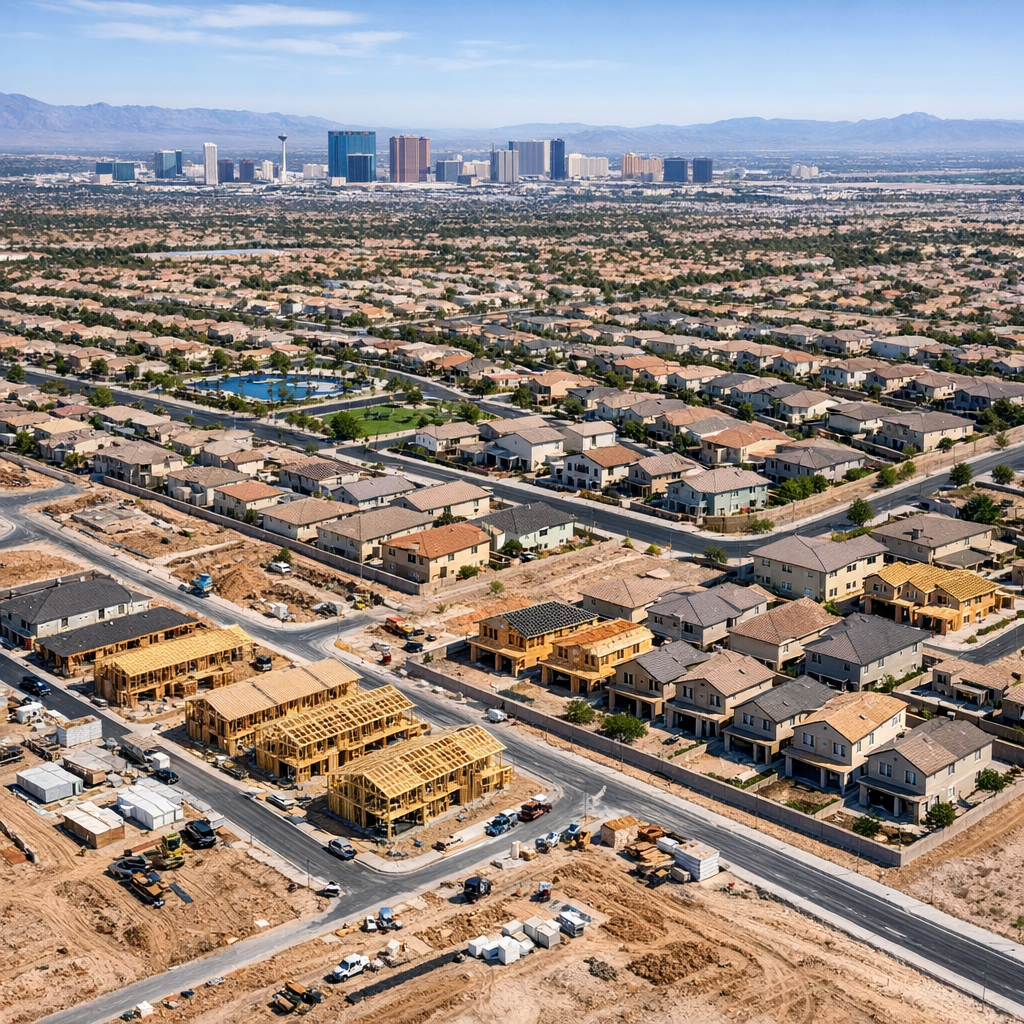
The Las Vegas housing market is experiencing notable changes, offering both challenges and opportunities for residents and investors. Understanding these trends is essential for making informed decisions.
Market Trends
Recent data indicates a slight decrease in home prices. Over the three months ending April 2026, the median sale price was $440,000, a 2.8% decline compared to the same period last year. Homes are spending more time on the market, averaging 62 days before sale, up from 50 days previously. Additionally, the number of homes sold decreased from 2,427 to 2,340 year-over-year. This shift suggests a move toward a more balanced market, providing buyers with increased negotiation power.
Rental Market Dynamics
The rental sector remains robust, with demand for apartments and single-family rentals staying strong. While specific rental price data is limited, the steady demand indicates a competitive market. Prospective renters should be prepared for potential competition and consider acting promptly when suitable properties become available.
New Developments
Several significant housing projects are underway, aiming to address the diverse needs of the community. Notably, Patriot Housing LV is developing a 348-unit affordable housing complex for veterans on a 15-acre site at Tree Line Drive and Vegas Valley Drive. This project includes 108 transitional units and 240 traditional housing units, offering studio to three-bedroom floor plans. The development underscores a commitment to supporting veterans and expanding affordable housing options.
Ovation Property Management is also contributing to the housing landscape with multiple projects. ‘Heirloom at Bruner,’ an affordable senior housing community with 194 units, is set to break ground in the third quarter of 2026. Additionally, ‘Casara at West Henderson,’ a 390-unit affordable workforce housing development, is scheduled to begin construction in the second quarter of 2026. These initiatives reflect ongoing efforts to meet the housing needs of various demographics in Las Vegas.
Conclusion
The Las Vegas housing market is in a state of transition, characterized by slight price declines, extended time on the market, and active development projects. For buyers, this environment offers more negotiating power and a broader selection of properties. Sellers may need to adjust expectations and strategies to align with current market conditions. Staying informed about these trends is crucial for anyone navigating the Las Vegas real estate landscape.