

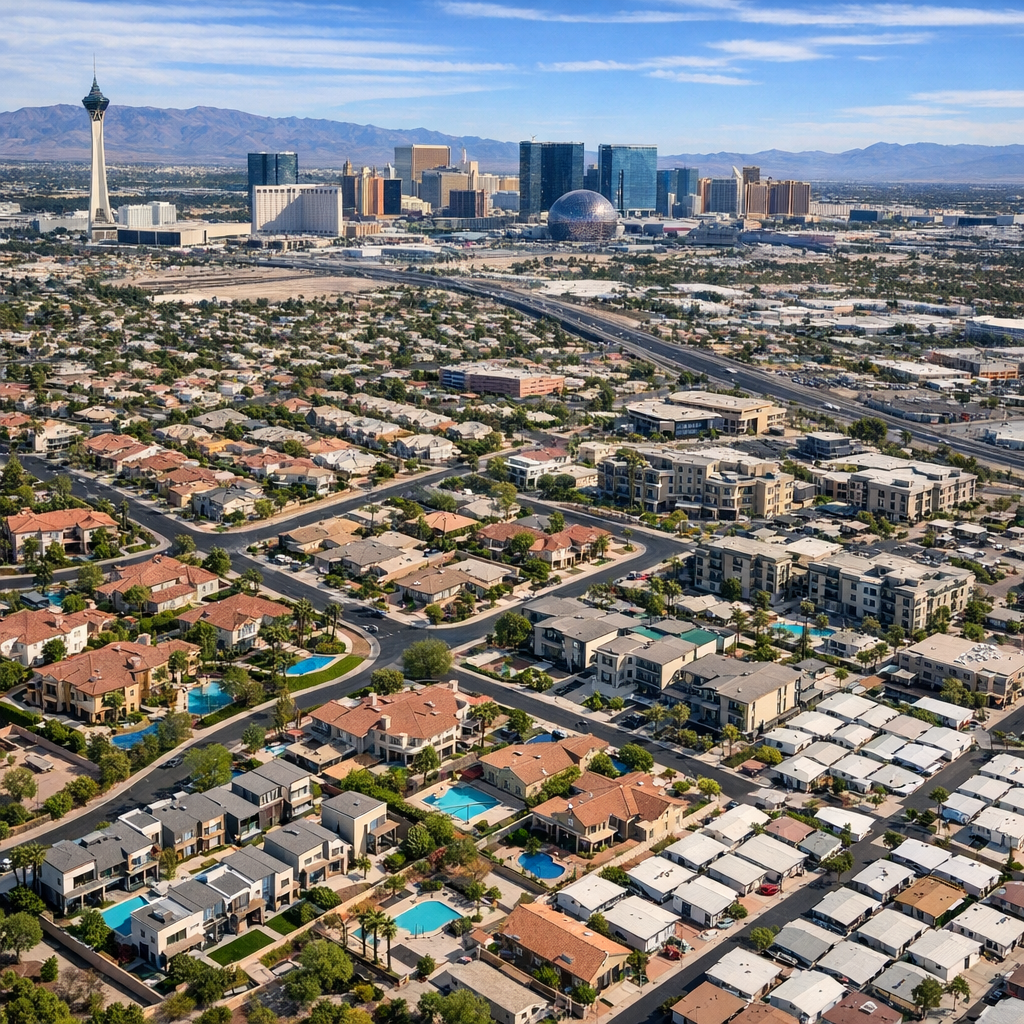
Las Vegas is grappling with a significant housing crisis characterized by escalating home prices, increasing rent, and a shortage of affordable housing options. This situation has placed a substantial burden on many residents, particularly those with low to moderate incomes.
Current Housing Landscape
According to Jeremy Aguero of Applied Analysis, the median income in the Las Vegas Valley is approximately $70,000. However, income growth has not kept pace with the rapid rise in housing and rental prices, creating a widening affordability gap. Additionally, the availability of developable land is diminishing, with estimates suggesting only about eight years of developmental land remaining. This scarcity contributes to the upward pressure on housing costs.
Community Initiatives
In response to these challenges, various community organizations and local authorities are implementing initiatives to alleviate the housing crisis. The Las Vegas City Council has identified housing as a top priority for the next five years, alongside public safety, economic development, and healthcare.
Furthermore, the Southern Nevada Health District’s 2025 Community Health Assessment highlights access to care, chronic disease, and public health funding as critical areas of focus. Addressing housing instability is integral to improving overall community health outcomes.
Challenges and the Path Forward
Despite these efforts, significant challenges persist. The displacement of individuals due to construction projects, such as the $15 million flood channel upgrade, has led to increased homelessness in certain neighborhoods. Residents have reported a rise in break-ins and other issues as a result.
To effectively address the housing crisis, a multifaceted approach is necessary. This includes policy reforms to increase the availability of affordable housing, investment in infrastructure to support sustainable development, and enhanced social services to assist those affected by housing instability.
Community engagement and collaboration among stakeholders are crucial in developing and implementing solutions that meet the diverse needs of Las Vegas residents. By prioritizing housing stability, the city can work towards a more equitable and thriving community for all.