

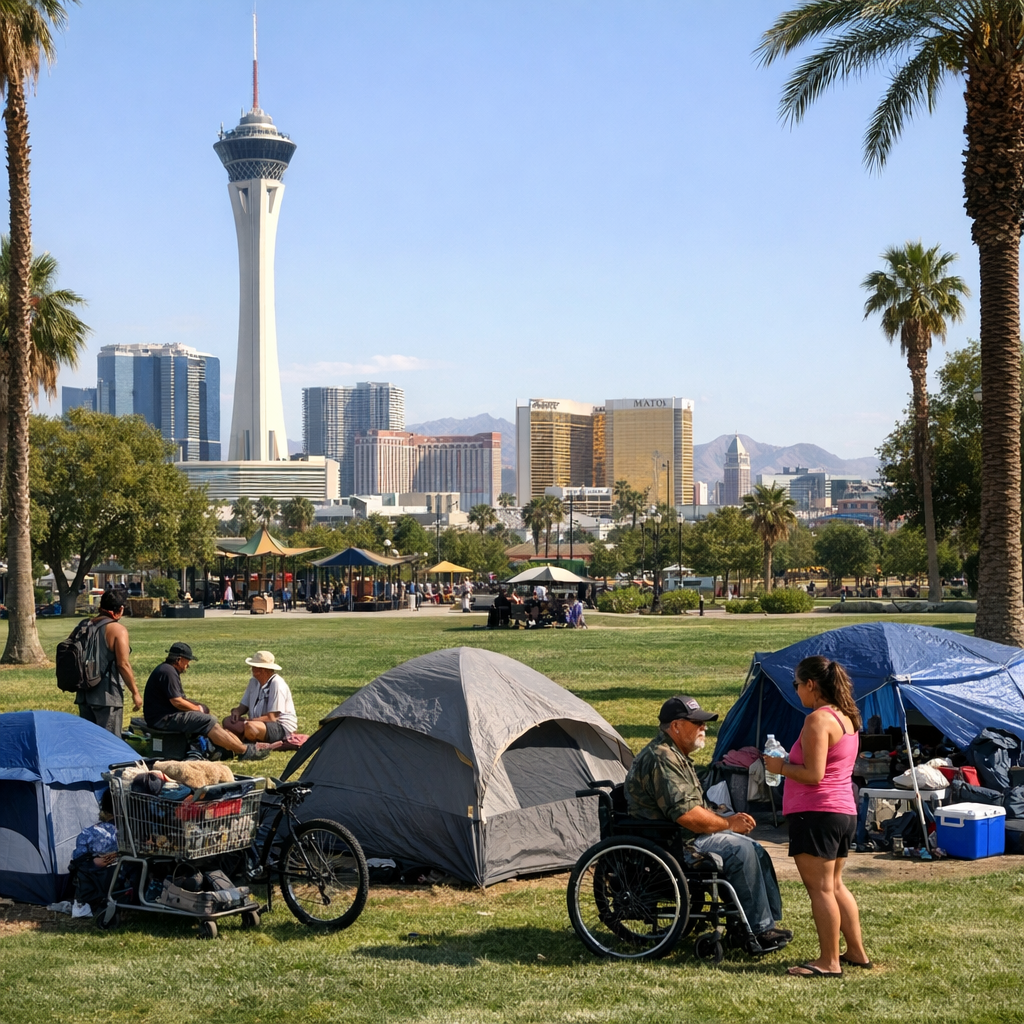
In recent months, Las Vegas residents have observed an increase in the number of unhoused individuals seeking shelter in public parks, raising concerns about safety and cleanliness. This issue has been particularly noticeable in areas like West Flamingo Park, where community members have reported encampments and associated challenges.
Community Concerns
Local residents have voiced their worries about the impact of these encampments on the community. Some have noted the presence of unhoused individuals in parking lots and grassy areas, leading to apprehensions about safety and the cleanliness of public spaces. Families visiting the parks have expressed discomfort, especially when encampments are in close proximity to play areas.
Official Response
Clark County Commissioner Michael Naft has acknowledged these concerns, emphasizing the county’s commitment to maintaining public safety and cleanliness. He stated that parks maintenance teams are deployed daily, and law enforcement officers from the Spring Valley area command conduct regular patrols to address any issues. Naft highlighted that while public parks are accessible to everyone, behaviors that create unsafe environments are not tolerated.
Balancing Compassion and Enforcement
The situation underscores the complex challenge of balancing compassion for unhoused individuals with the need to maintain public order. Some residents have expressed empathy, recognizing the hardships faced by those without shelter. However, the presence of encampments has also led to reports of increased incidents, such as stolen mail and packages, affecting the broader community.
Ongoing Efforts
County officials continue to encourage residents to report any concerns, as they strive to address the issue through a combination of enforcement, cleanup efforts, and connecting unhoused individuals with available services. The goal is to ensure that public spaces remain safe and welcoming for all community members while providing support to those in need.
As Las Vegas grapples with this ongoing issue, community engagement and collaborative efforts between residents and officials will be crucial in finding sustainable solutions that address the needs of both the unhoused population and the broader community.