

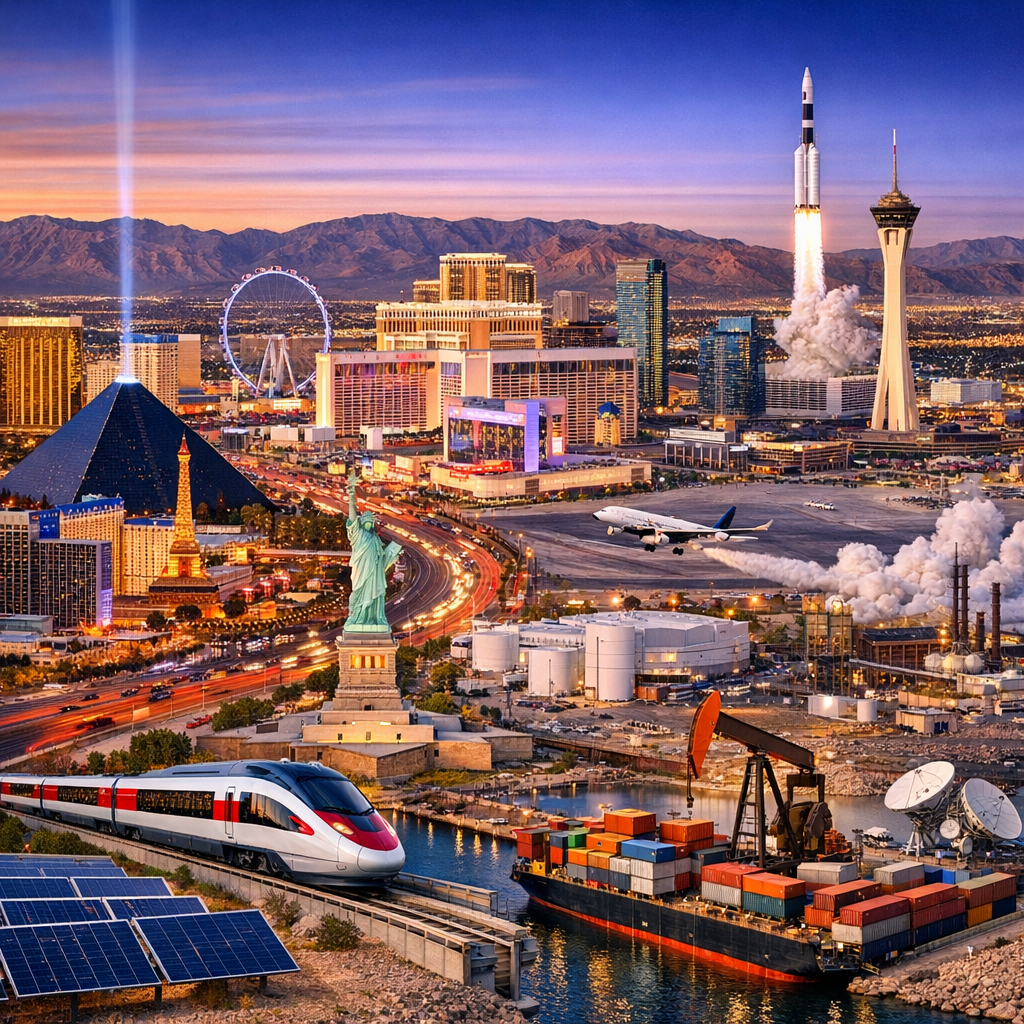
Las Vegas, renowned for its vibrant tourism and gaming industries, faces unique economic challenges influenced by national policies and its own structural dynamics. The city’s heavy reliance on tourism makes it particularly sensitive to federal economic decisions and underscores the importance of diversification for long-term resilience.
Impact of National Economic Policies
Federal economic policies, including tax reforms and infrastructure spending, have direct implications for Las Vegas. For instance, changes in federal tax policy can affect disposable income levels nationwide, influencing tourism spending in the city. Additionally, federal investments in infrastructure can enhance accessibility to Las Vegas, potentially boosting visitor numbers.
Challenges in Economic Diversification
Despite efforts to diversify, Las Vegas’ economy remains heavily dependent on tourism and gaming. This reliance has historically made the city vulnerable during national economic downturns. For example, during the Great Recession and the COVID-19 pandemic, Las Vegas experienced higher unemployment rates compared to the national average, highlighting the need for a more diversified economic base.
Local Initiatives and Future Outlook
Local leaders and policymakers are actively seeking ways to broaden the city’s economic portfolio. Initiatives include attracting technology firms, promoting renewable energy projects, and investing in education to build a more skilled workforce. These efforts aim to reduce the city’s susceptibility to national economic fluctuations and create a more stable economic environment.
In conclusion, while national economic policies significantly impact Las Vegas, the city’s proactive steps toward diversification are crucial for its future resilience. Balancing the thriving tourism sector with emerging industries will be key to ensuring long-term economic stability.